‘Snow Joke – The Cost of Snow

Cardiff Business News

At primary school nothing excited us more than snow. Although the teacher wouldn’t let us out of class until the end of the day, we talked about it, thought about it and even planned our next hiding spot to pick off unsuspecting parents and classmates.
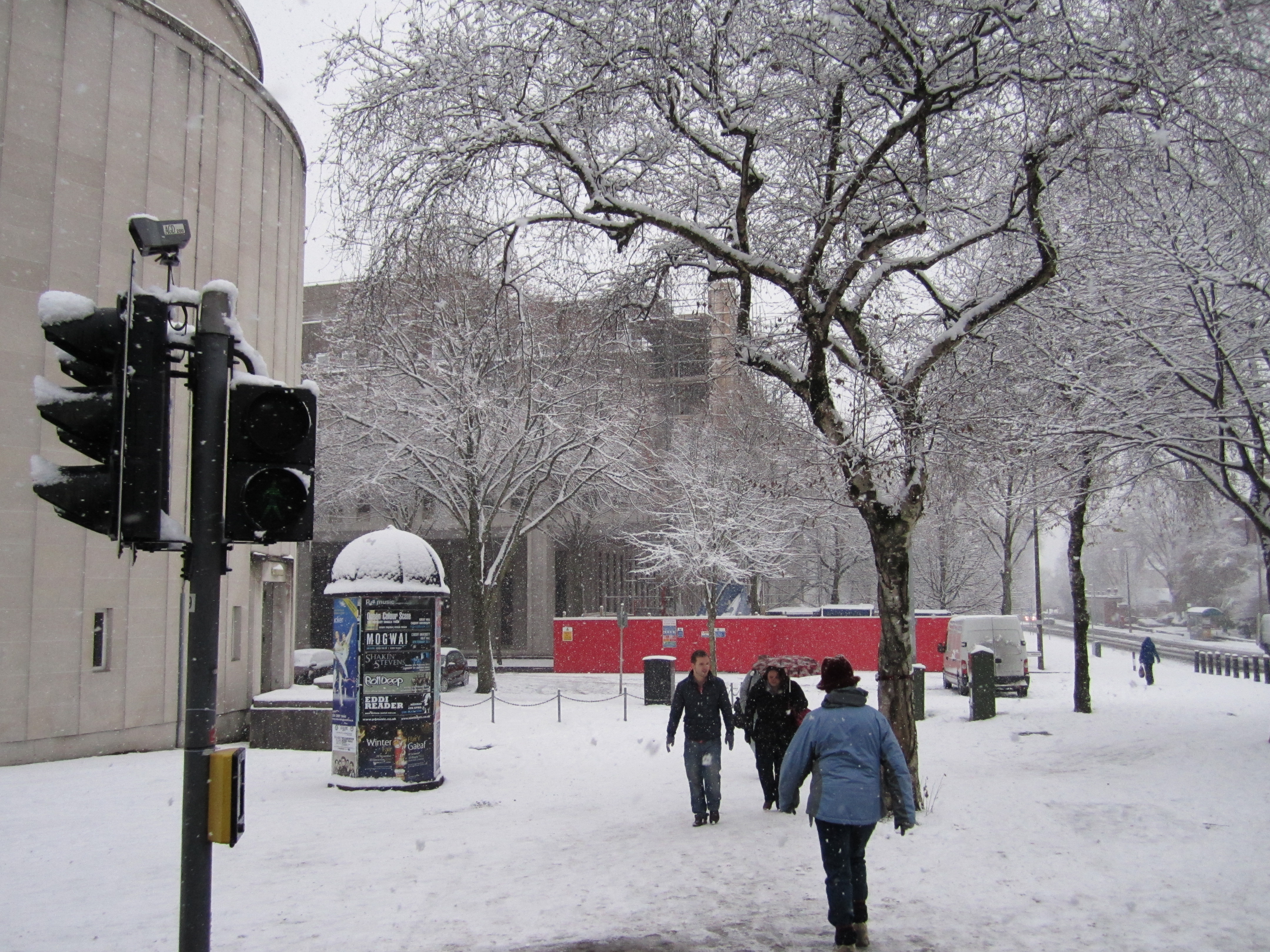

Snow brings Cardiff City Centre to a standstill

People are curious about snow. Who would have thought a frozen bit of water could cause so much intrigue. Some people poke their heads out of their doors just to see what is happening, others inspect the ground in their front garden and on top of their cars, while others still dig a clear path outside their driveway to minimise the risk of being sued.

Then there are those who are unable to resist the juvenile desire to form a rough sort of spherical shape and launch it at a wall, lamppost or passing pedestrian.

But today thousands of people across the UK are not so intrigued or enthusiastic about the big freeze. A White Christmas could put festivities “on ice” this year.

As flights have been cancelled right across the UK, it is important to know your rights and get the customer service you have paid for.

This scenario happened to me today. At the crack on dawn I dragged a heavy suitcase through the mushy streets of Cardiff in search of a taxi or any form of transport to get to the Airport. I checked all the updates at my departure and destination airports, both reassuring that flights were operating as per usual.

Eventually a taxi driver spotted me making deep tracks in the snow-laden pavement and took me to the airport. I wasn’t too bothered about the fare, a hefty £25, as I was sure my flight was due to board shortly. When I got to the desk, however, I was told the flight had just been cancelled.

My flight has been rescheduled for tomorrow, but I will lose out on airport transfers. Is the flight company liable to pay compensation? According to the Airport Users Traffic Council compensation is not handed out when flights are cancelled due to ‘extreme circumstances’, which includes bad weather.

Under the same act, the airline is required to refund me within seven days or offer a re-routing. But I will not qualify for compensation for hotel stays or transfer costs.

Aside from the cost of the snow to individuals, businesses will be hit as employees are stranded and shoppers postpone their big Christmas shop. It was estimated earlier this year the effects of snowy and icy conditions will cost businesses £1.2bn a day.

In the meantime as I am thinking of a plan ‘B’ – it could be a good time of year for ferry companies.

To see what areas have been affected visit the interactive UKsnow website.

paidContent:UK – Generating Online Revenue

Cardiff Media Blogs

When technology journalist Rafat Ali suddenly found himself out of work he had to find a way of making a living. Based in NYC in the late 90s Mr Ali covered the dot com boom with internet media company inside.com. But when his employer went under in 2001 as the internet bubble burst he packed his backs, headed for London and became one man blogging machine. This is where the story of paidContent:UK, a website covering issues facing the media industry and the business of mobile content, all began.

Rafat Ali
From Blogs to Riches

From blog-to-riches Ali sold his site to the Guardian Media group for £4m in 2008: a great success for the blogger-entrepreneur. How did he do it? It was a time when blogging was beginning to grow as newspaper sales were declining sharply and the media business was left in the lurch. Mr Ali took a leap and landed on his feet.

One of the most important issues for any blog is the question of how to sustain its activities. Many news sites adopt a combination of ads and charging for access. Advertising has changed as much as the news industry, rushing to new media platforms such as social media sites, online TV and blogs. It would certainly help bloggers to understand how advertising companies operate or at least how they target audiences in a way that traditional ads in the paper can’t.

Former JOMEC student, Robert Andrews, at paidContent:UK said online advertising had less of a premium due to the volume of the web. How true. On a newspaper there are a limited number of pages where the audience will engage with the ad. Online, however, page space is unlimited.

Space may be limited but can the same be said for quality? If bloggers can create enough valuable and quality content then surely this will help to raise the capital of their online space, that is, capital measured by number of viewers.

But the real challenge to the blogging world is converting viewer attention into revenue. This is where the debate about paid content begins. Display banners are one of the traditional methods of online advertising but are they the future? Contextual adverts offer the ability to advertise on sites by buying near particular keywords. But tablets such as the ipad are changing this model.

The web, in fact, may only be a transitory stage before technology races ahead, where people will consume media on tablets, apps and mobile media. For news this may not be so bad a transition. Mr Andrews revealed people are willing to pay for apps, while this new platform looks more like the print product on new technology than it does on the web just like the New York Times Google Web app.

Is this the beginning of the end for the web?

Perhaps bloggers should be developing apps to stay ahead of the game.

Wales: The UK’s poorest nation

Cardiff Business News

It’s official. Wales is the UK’s poorest nation.

A headline posted on the Wales Online website may not have surprised many had it been published in the early 90s, given the economic decline from years of booming coal and metal industries. But decades have passed since then. Surely enough time has elapsed for this country start to develop new economic strategies and to lift itself out of poverty?

FREE W(H)ALES
What can be done to free Wales from poverty?

Of course, poverty is relative. So what does being ‘poor’ actually mean? The claim made by Wales Online is based on data released by the Office for National Statistics, looking at Gross Value Added per head, a measure of average income. The data revealed the GVA for Wales was just 74.3% of the UK average.

This means that if I live in Wales I will probably be earning 74.3% of what I would be earning if I lived elsewhere in the UK. Not a great advertisement for the young, bright and ambitious.

Some would argue that the GVA does not take into account living costs, which may be true, but it still does not explain the fact that the GVA per head in Wales has dropped from 85% of the UK average GVA to the 74% it is at today. Meanwhile unemployment in the region is at 8.1% of the population compared to 7.7% in the UK.

On that definition Wales is slipping into poverty.

So what is being done about it?

The WAG published a 50 page document in July called d Economic Renewal: a new direction which identified six key sectors to the future of the Welsh economy.

– ICT
– Energy and environment
– Advanced materials and manufacturing
– Creative industries
– Life sciences
– Financial and professional services

And earlier today, the WAG launched a strategy called Digital Wales. In a statement on the WAG website First Minister for Wales, Carywn Jones, outlined some of the problems facing Wales in the drive to get the country online.

– A third of the adult population in Wales does not use the internet;
– Less than 40% of Welsh SMEs actually sell on-line;
– One in six Welsh employers consider the IT skills of their employees insufficient;
– Less than a quarter of the population currently use online public services;
– High speed broadband is not yet available in many parts of Wales.

As far as I can see, in addition to the many infrastructural challenges to growth in the digital sector there is another significant obstacle to economic growth in Wales. The the job market is heavily reliant on the public sector, which will soon face cuts as austerity measures are implemented.

Now with the explosion of the internet it seems digital industries are more important than ever, but with poor infrastructure will these measures from the Welsh Assembly Government be too little too late?

How to go Hyperocal: business tools

Cardiff Media Blogs

Why would anyone do it?

There seems to be no money in it. It takes hard work, passion, blood sweat and tears while it involves hours of research.

Day 139

Yet hyperlocal is growing.

Hyperlocal bloggers need to have certain qualities to succeed, says Glyn Mottershead at Cardiff University. Bloggers need to be obsessive, independent, link lovers, passionate and willing to consider ways of monetising the hyperlocal blog. No-one has quite cracked it yet.

I must admit, going hyperlocal seems a bold call. With no proven revenue model it is difficult to think of many reasons to put so much investment into something that may not give any returns.

There are, however, some promising examples of hyperlocal models in action, providing an invaluable service to their communities.

Take the hyperlocal site Scottish TV

Or the Wales Online website

And Hannah Waldram’s Guardian hyperlocal blog

These blogs and news sites involve the community and readers like never before where guest comments and posts are welcomed.

But for a hyperlocal blog to truly succeed, as in the case of the Cardiff Guardian online blog it takes interaction not only virtual level but being physically present in the communities. Connecting people, informing and giving a voice to the community is the name of the game.

While this is true for news sites, it can be the same for entrepreneurial bloggers and businesses.

To build any business you need customers and to make a business out of writing you need an audience.

In the past businesses sought to attract customers from a local catchment area. The way businesses and newspapers go about interacting with a community is now changing.

Hyperlocal is more of an attitude than a place.

I read an inspiring example in Wales Online this Sunday of a Welsh young man who left the country and set up a bodybuilding site. He is now editor-in chief of the world’s largest health and fitness website.

Anyone with a bright idea and a real passion for sport, music, business, politics or people can base a website around the idea of hyperlocal.

Hyperlocal is, in this sense, a community. It could be sports fans, running enthusiasts or a business community. The real task is to create a useful product, engage and inform a community of people. With the rise of the internet, it has been easier than ever to set up an online business.

This can go a step further. One business has been built around a product, the next level of internet development is approaching frightening lengths to which a business can obtain personal information.

Programmes such as Facebook places, Groupon, foursquare and Gowalla encourage users to check in their preferences and geographical location. Just yesterday GAP announced it was giving away 10,000 pairs of jeans for free for the first people who checked into their store using Facebook Places. If I walk past the store and ‘check in’ with my iphone I can get a free pair of jeans.

There must be a catch?

As businesses are developing their use of RFID chips found in many mobile phones, which can track where people are at a given time.

Puce RFID photographiée en studio sur fond blanc.

These can allow users to interact with objects, building and companies in their area even suggesting news stories to people as they interact with an environment. Imagine you are on a bus passing a shopping centre. An iphone application could send you interactive information about what deals are on offer, helping you decide whether to get off the bus and grab a bargain.

This is the future of Hyperlocal.

Openly Local lists many of the hyperlocal sites in the UK on a google map.

Businessweek round-up: Ireland’s future, how the markets influence sheep thieves and Christmas shopping in Wales

Cardiff Business News

An uncomfortable week ahead for the Irish

It will be an uneasy week for Ireland as its Budget for 2011 will be announced on Tuesday. The Guardian has called for the Irish politicians to go back to the IMF to renegotiate its bailout package as the Irish taxpayer is expected to pay one out of every five pounds in interest on its debt. If it a renegotaition is not reached, writes the Guardian, a further bailout deal could lead to a ‘Treaty of Versailles’ scale legacy on the Irish Economy.

Irish Prime Minister (Taoiseach) Brian Cowen
A worried Brian Cowen, Ireland’s Prime Minister

Sheep Thieves influenced by market trends

It is very rare that the Financial Times makes me laugh, but this weekend’s edition induced a chuckle as I read the headline “Ram-raiders flock to rustle sheep as global trends shepherd in price rises.” It wasn’t so much the Sun-esque headline that grabbed my attention but the fact that farmers will have to be watching the markets to anticipate new trends in the activities of thieves. The FT’s North of England Correspondent, Andrew Bounds, explains: “The weak pound means many sheep are being exported, while traditional sellers such as New Zealand are struggling with drought and sending what lambs they do have to newly wealth Asia. This is helping push up prices at home.”

As prices are pushed up, stealing sheep becomes more profitable. The same happens when commodity prices such as steel rise. In such instances theives have stolen manhole covers.

Lying sheep
Sheep Raiding is at a 10 year high

A round up of the Welsh Business News

Christmas is on its way and many shoppers are holding off for a bargain in the early sales. But Director of St. Davids Mall, Steven Madaley, has warned retailers won’t be slashing prices before the official post-Christmas sales. The higher rate of VAT is to come in this January, encouraging pre-Christmas buying.

Don’t bank on pre-Christmas sales, warns centre director

The Welsh Assembly Government has announced a consultation session on the future of the banking system as the Independent Commission on Banking (ICB) comes to Wales next week. The ICB will be at the Pierhead in Cardiff Bay on December 8 to debate and hear evidence.

Have a say on banking system

Other Cardiff Related Business News:

Languages needed to boost exports

Biotech firm makes acquisition

Doubts over Cardiff Bay plan for sector aid to companies

More next week.

The BBC dosen’t tell the full story about China

Cardiff Business News

The Cardiff Business community heard how BBC coverage of UK trade with China does not show the full picture at a business event in Cardiff earlier tonight.

Over one hundred people attending the event organised by the Cardiff Confucius Institute heard from business leaders who are currently operating in with the world’s fastest growing economy.

Representatives from leading Welsh Businesses presented case studies and success stories of working China, dispelling claims in the UK media that a trade imbalance was desperately in favour of the world’s fastest growing economy, which saw its GDP increase by 8.7% last year.

Stewart Ferguson of CBBC, the China Britain Business Council, challenged reports from BBC’s business editor Robert Peston who said Chinese exports to the UK were three times the figure for imports.

In an article on the BBC website earlier this month Mr Peston said: “In 2009 we sold £8.7bn of tangibles and intangibles to China, and we bought three times as much, £25.8bn, from the Chinese,” he says.

“Although over 10 years our sales of goods and services to China have increased by a seemingly healthy 4.6 times, imports have risen by a far greater multiple, 6.6 times.”

Mr Ferguson said although this was true, there were other contributions to the UK economy from China such as £2bn per year coming from Chinese students in China.

He added there are 4,000 British enterprises in China, while UK based accountancy firms dominate the Chinese market and as over 150m Chinese residents are expected to flock to the cities over the next ten years demand could grow for UK goods and services.

Responsible Business: Interview with Business in the Community director Simon Harris

Cardiff Business News

Just two days ago the Office for Budget Responsibility (OBR) reviewed the figure of public sector job losses down from 490,000 announced by George Osborne in the CSR last month to 330,000. Despite this good news, both the public and private sector will suffer as a result of government spending cuts.


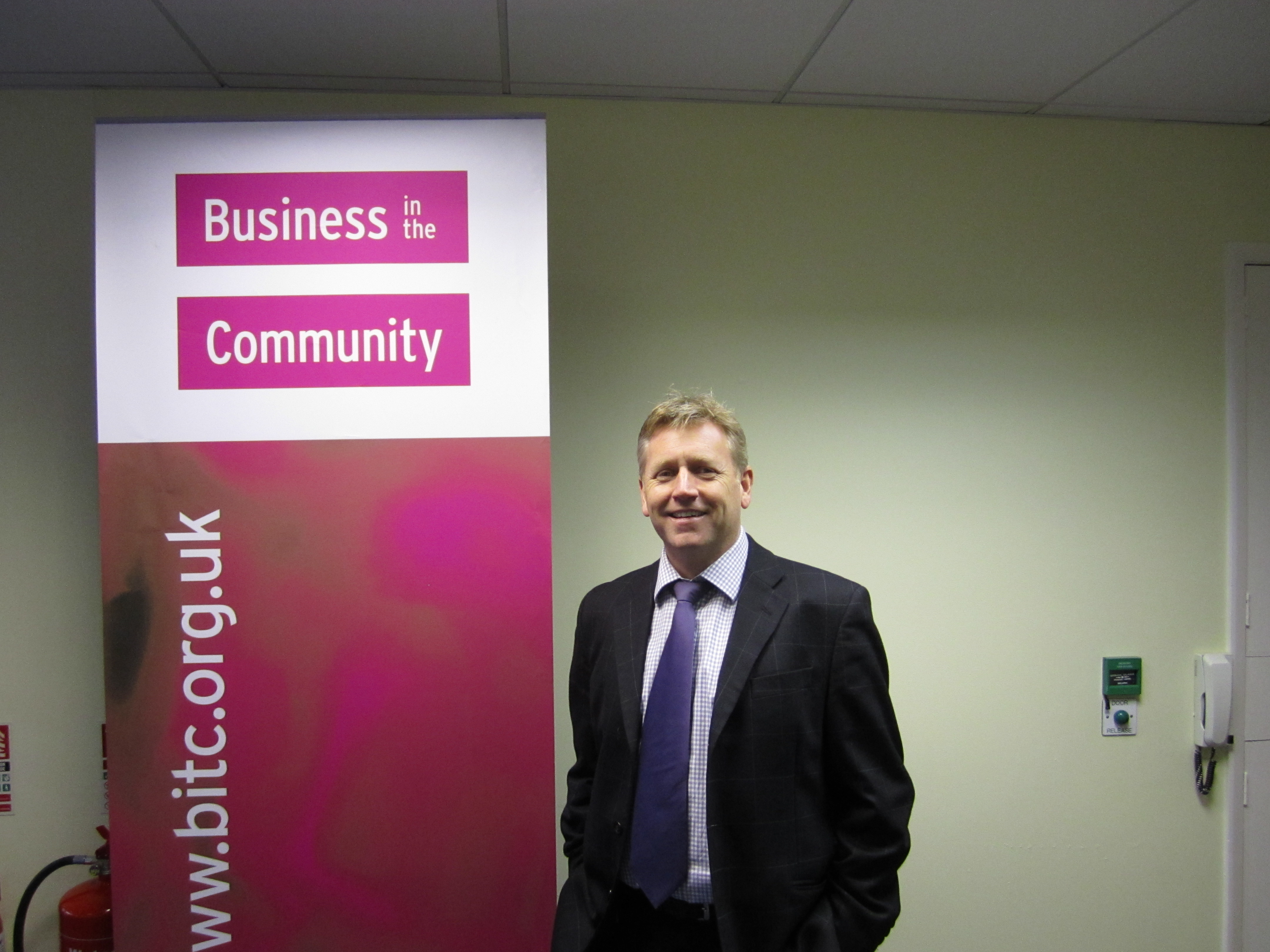
(Mr Harris at his office in Cardiff)

In these austere times as public sector contracts dry up and the banks refuse to lend, many business leaders will look to streamline their operations to save money and retain staff where possible.

Meanwhile globalisation has enabled companies to outsource to emerging markets like China or India and cut corners where possible to trim their budgets.

But as cutbacks are made, will responsible business practices suffer?

Sitting in his BiTC office boardroom, Mr Simon Harris, told me this is not necessarily the case.

When asked whether businesses were less likely to invest in responsible and sustainable business projects Mr Harris said:

“This is a particularly important time to focus on responsible business practice.”

“Our argument is that to separate yourself out as a business from the rest you need to look at how you are different from the rest.”

“In the retail sector consumers are becoming more aware of where their food comes from and purchase fair trade goods, for example.”

“So, if a business can promote a very positive responsible attitude then there is a possibility that consumers would be more likely go for those businesses than those that aren’t.”

“There is evidence that business leaders across the UK see responsible business practices as being key to their strategic development within the next few years.”

Mr Harris did, however, admit the CSR and public spending cuts could affect operations of the BiTC.

“With reference to the BiTC, as it does receive funds from the WAG, it will be difficult to renew some of the programmes we are running,” Harris said.

“In terms of the private sector if there is a continued or double dip recession it could be more difficult for them.”

Mr Harris said he was hopeful projects such as working in schools and exposing business leaders through projects such as “Seeing is Believing,” would help promote responsible business practices.

In as the recession continues it remains to be seen how business practices will react to tighter budgets and and a contraction in the public sector.

Applications open tomorrow for the BiTC flagship awards the Wales Recognition Awards 2011.

BiTC is a UK based business-led charity, which seeks to promote responsibility in the workplace, marketplace, community and the environment and it is a member of The Prince’s Charities. It’s headquarters are in London.

The Beauty of Data

Cardiff Media Blogs

The word ‘data’ may not conjure the image of a Madonna and Child, but with a bit of manipulation, numbers and facts can be made into something beautiful.

Although numbers, formula, tables and graphs may sound uninspiring, we don’t live in a world of colourless information.

We all use data, and people are not colourless.

Politicians, monitoring bodies, health organisations, charities, businesses, the media and individuals alike, we all use data in some shape or form, often to inform us of trends and to make decisions.

Data can be used creatively to explain, enlighten, educate and improve. It is as vital to journalism as it is to business.

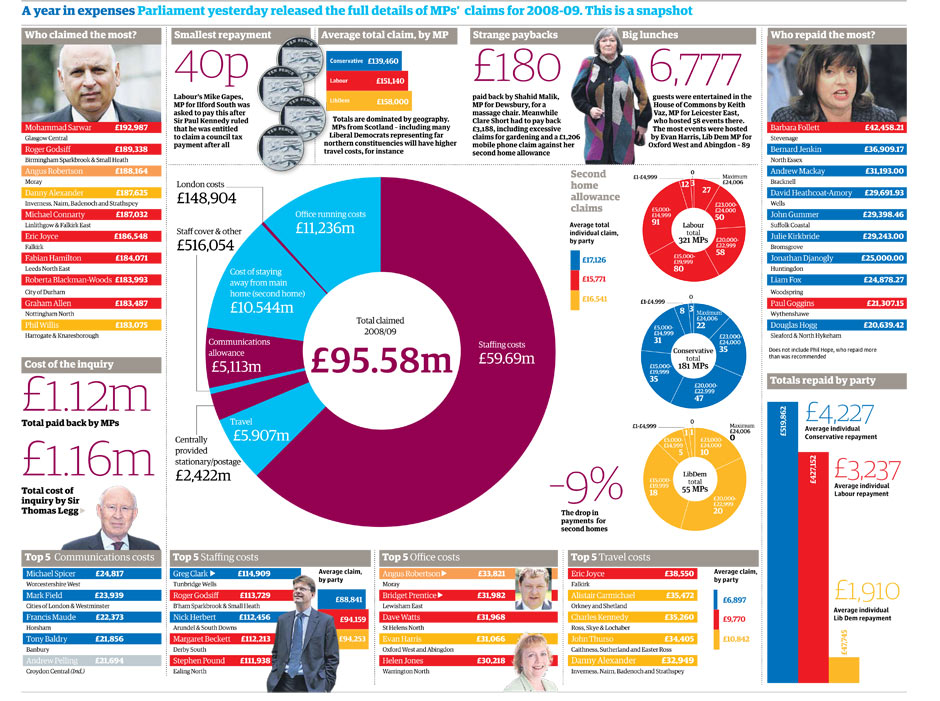
Data is powerful. It can be used to encrypt secretive information, it can open up access to people and reveal the practices and decisions of those in power. CD’s with data can fetch hundreds of thousands of pounds and can bring down politicians, just as in the expenses scandal in 2009.

This is a typical example of how the Guardian visualises data in its newspaper – in this case showing the MP expenses dataset.

But with the expansion of the internet, the uncontrolled influx of data can often be overwhelming. It can present a great challenge to journalists, as their primary task is being shifted from obtaining data to dressing it up for the consumer. The task of the journalist becomes as much about aesthetics as it is about raw data, as more people have access to information, we should bear in mind that the audience wants to be entertained as well as informed.

Online tools like Wordle can help in this process. This tool can dress up the Wikipedia entry for ‘data’ making it more aesthetically appealing, while it informs the audience of the nature of data.

Wordle: data

But let’s take a more recent example: the wikileaks revelation of various US diplomatic cables known as ‘cablegate.’

The guardian website has an interactive guide to the leaks. The information presented up in an accessible and interactive way, allowing the user to search through the data in an interactive map, allowing us to navigate to the information we want.

As data becomes more widely available, surely there will be a greater need for data specific journalism. Data presentation skills will become more important than ever and with it the apt use of online tools such as Wordle, Many Eyes, Facutal, Swivel, Socrata, Verifiable.com, Google Fusion Tables, Widgenie, iCharts, Chart Tool, Open Heat Maps, Fusion Charts, Excel, Google Docs and Yahoo pipes.

Of course data can be manipulated and it is the job of the journalist to identify where PR wallpaper is covering the cracks in any political system.

Data is the journalist’s companion, together they can inform, educate, warn and criticise.

It may just take a while for a new relationship to flourish in the new online environment.

Will Lewis: Times of Change

Cardiff Business News, Cardiff Media Blogs

Times may be changing in the media business, but is The Times changing the business of media?

Will Lewis, the man who brought down scores of politicians by uncovering the expenses scandal with the Telegraph in 2009 and famously broke the Exxon merger with Mobil at the Financial Times in 1999 addressed the Cardiff Business Club. at St. David’s Hotel and Spa in Cardiff Bay last night.

The former Editor-in-Chief at Telegraph Media and current Group General Manager at News International, which owns The Times newspaper, outlined some of the fast-moving changes taking place in the newspaper industry, sharing some of his experiences with the Cardiff business community. He said:

The last five years has seen the digital ecosystem evolve. It offers a real opportunity.

News International, the publishing arm of Rupert Murdoch’s media empire, has been in the spotlight recently as being one of the few news organisations to introduce a paywall for its Times newspaper. According to News Corp the paper has sold 105,000 digital products since they were launched five months ago, although around half of these are monthly subscriptions.

But in his speech last night, Mr Lewis defended the paywall saying there were many changes facing his industry.

He said the rise of search facilities, broadband, iphones, ipads, quality websites and applications have changed the way we consume news encouraging a shift towards digital platforms, a trend accelerated by the rising cost of paper.

There is a change imperative for newspapers.

Mr Lewis said there needs to be more customer contact while branding will play an important role in determining where people choose to consume their news, even on an international basis. “Let’s not restrict content to our shores,” he said.

He hinted many newspapers were not adapting to change quick enough, saying the news industry needs to move away from a strategy of damage limitation.

More of the same is not a recipe for growth.

At a tough time for newspapers Mr Lewis challenged the news industry: “We need to back ourselves to bet on ourselves.”

The paywall issue has been raging over the past few months, with many of the major newspaper outlets holding different opinions about online business models. The Guardian, for example, secures its online revenue base from advertising.

But as the pawyall concept is relatively new it is still unclear whether The Times’ “charge ahead” will pay off or not.

The Cardiff Business Club is a business membership group, which invites with guests of international standing in business, law, politics and other areas to speak on a monthly basis.

Serving the people

Cardiff Media Blogs

Journalists may enjoy the thrill of racing the clock to break a story, rising to the challenge to be creative in the space of a few inches of newspaper, breathing life into the mundane or even attracting people’s attention with pictures.

But is that what journalism is really all about?

Is it not about serving people?

Joanna Geary a social media guru at the Times challenged trainee journalists at Cardiff University to write down their reasons for chosing journalism as a career, providing an uneasy moment for those whose job is to ask questions rather than answer them.

“It’s not about us getting the story,” says Geary, it’s about the audience.

In fact, its not about getting your name in print, or attracting any sort of reader, but meeting their needs of people. Newspapers who look down on their readers can have no hope of ever succeeding as a business.

As the internet is changing the news-scape, users now have more control than ever before. Audiences can challenge journalists and pitch their own ideas. A community forms and people that care about an issue are forged together, forming a niche area where people can collaborate.

So as and where communities form, journalists must interact with them. These audiences have news ‘needs’ and ‘wants’. And now, thanks to the internet, they can communicate directly with the content provider to express their appetite for news. Anyone reading this, for example, can leave a comment or write to me on twitter.

But if editorial staff play to the ‘wants’ of people to attract more views could, however, lead to myopic news values. Will news shrink entirely to the tune of its readership?

Have a look and see what the most popular stories are now on the BBC’s counter. The most popular videos on youtube contain Justin Bieber and Lady Gaga – an indicator of what people want. Let’s hope newspapers don’t give in to online peer pressure as revenues crumble.

Obviously there is a necessity to attract an audience, as audiences bring revenue. But as there is so much choice on the internet, does it mean news sites becomes more about a brand than news per se?

Let’s take a hypothetical situation:

I am a businessman and so I am interested in business news, changes in government policy and anything that might affect my business. I could go to any number of outlets or news sites. But I will decide to go to one that I am familiar with. I will go to a source that I can trust and with whom I share news and/or political values. I choose the Times online.

I used to enjoy this source for free. But unfortunately now I have to pay for it because of a paywall.

The leads me to a crucial question:

Is the Times business news so unique and useful that I will not go anywhere else to find out what is happening in the business world? Do I trust the journalists and enjoy their writing style, find their analysis helpful and understand the way they present data? This is what you might call added-value journalism.

News in the future could well be based on brand, reliability, but also about online relationships. I am much more likely to read a news site that listens, interacts and cares about my business needs.

A news outlet will need to have a pre-defined model, niche strategy and brand. For if it does not, I will simply take my business elsewhere.

It poses a great challenge to journalists: be informed, inform, be reliable and accurate, be trustworthy, listen, serve your audience and interact.

Is it possible to be and do all these things?

With a smart use of technology, a solid grasp of social networking, such as the use of Twitter for tip offs but still hold onto the fundamental skills of journalism of robust tradecraft, strategy, good contacts and accuracy it is still humanly possible do all of these.

It’s about building a personal brand and serving people.